
AI Doesn’t Fix Broken Systems. It Scales Them.
“Automation and technology don’t cure behavioural ruts: they just create new instances of them.”
When I first met conceptual artist Kenneth Goldsmith, MoMA’s first poet laureate, he had recently been making headlines for Printing Out the Internet. In May 2013, Goldsmith invited people to print pages from the internet and send them to LABOR gallery in Mexico City. The resulting exhibition filled the space with an almost incomprehensible quantity of paper. It was intentionally absurd: the internet could no more fit inside a gallery than the ocean could fit inside a glass.
The absurdity was also revealing. The internet ordinarily feels weightless. Goldsmith made its scale, materiality, waste, and politics impossible to ignore.
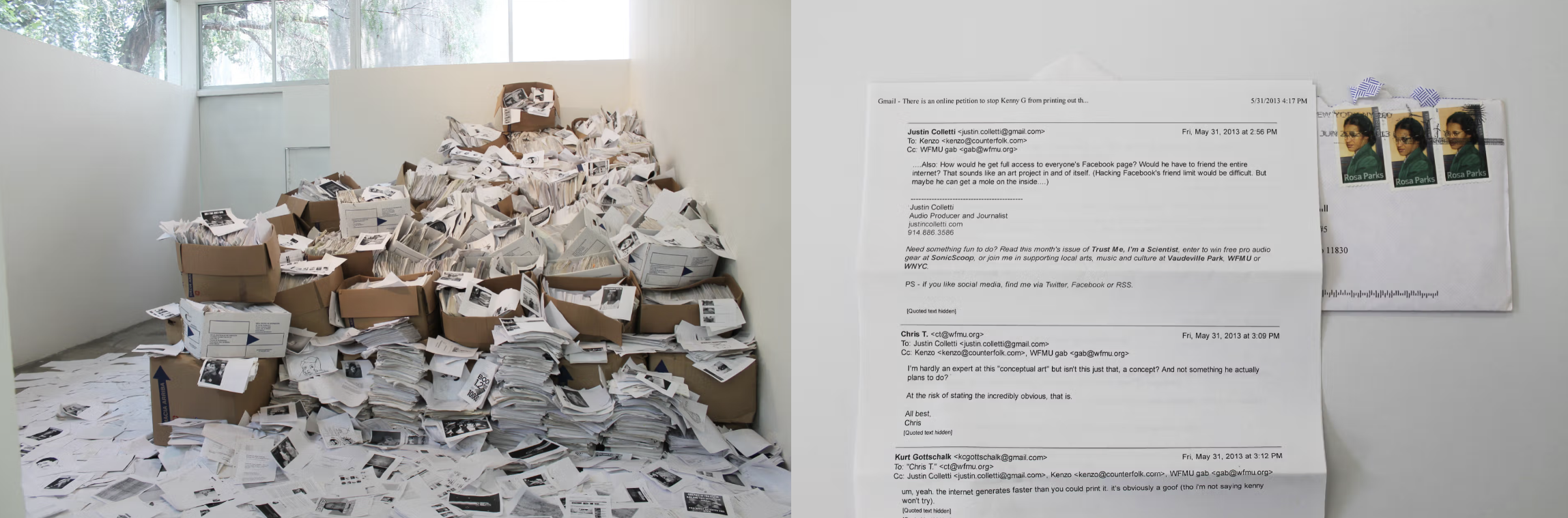
Kenneth Goldsmith, Printing out the Internet, 2013
The work paid homage to Aaron Swartz, the programmer and internet activist who challenged the enclosure of public knowledge. Swartz understood early that universal access to online publishing would not produce an egalitarian public sphere on its own. When everyone can broadcast, power shifts toward those who control discovery: the platforms, algorithms, and pathways through which some voices become visible and others disappear.
Nearly a decade later, OpenAI released ChatGPT. Goldsmith’s project had made the internet physically visible; generative AI seemed to reverse that gesture. Vast quantities of language disappeared behind a simple conversational interface. Type a request. Receive a fluent answer. The sources, labour, commercial incentives, infrastructure, uncertainty, and errors behind the response recede from view. ChatGPT was publicly introduced on November 30, 2022.
The interface feels frictionless. The system around it is anything but.

Jonathan Paul, Feast of 1,000 Likes, 2016
This distinction matters because organizations are adopting AI in systems already shaped by poor incentives, depleted resources, unrealistic workloads, shallow measures of productivity, and unequal distributions of power. Technology does not arrive and correct those conditions. Frequently, it makes them easier to scale.
A weak learning experience can now be produced in minutes.
A poorly framed research question can generate pages of plausible synthesis.
A presentation without a meaningful recommendation can become forty polished slides instead of ten confusing ones.
An organization that rewards volume over judgment can produce more content than anyone has the time or cognitive capacity to evaluate.
Automation may remove effort. It does not necessarily remove the right effort.

Jack Latham, Latent Bloom, 2020
This newsletter began as a way to examine the future of work and learning through cognitive psychology, mindfulness, neuroscience, and human behaviour. It has been quiet while I underwent treatment for cancer.
The interruption was physical, but it also changed my relationship to the language of productivity. Illness makes human limits difficult to treat as minor inefficiencies. It makes the fantasy of seamless, uninterrupted output look less like progress and more like a refusal to acknowledge what people are.
During part of that period, I also sold my experience in writing, education, research, and consulting to companies developing and evaluating AI systems. I have worked close enough to the machinery to appreciate some of its capabilities. I have also seen how readily fluent output can be confused with understanding, how quickly speed can be mistaken for improvement, and how much invisible human judgment remains necessary to produce something trustworthy.
That proximity has made me more—not less—concerned.
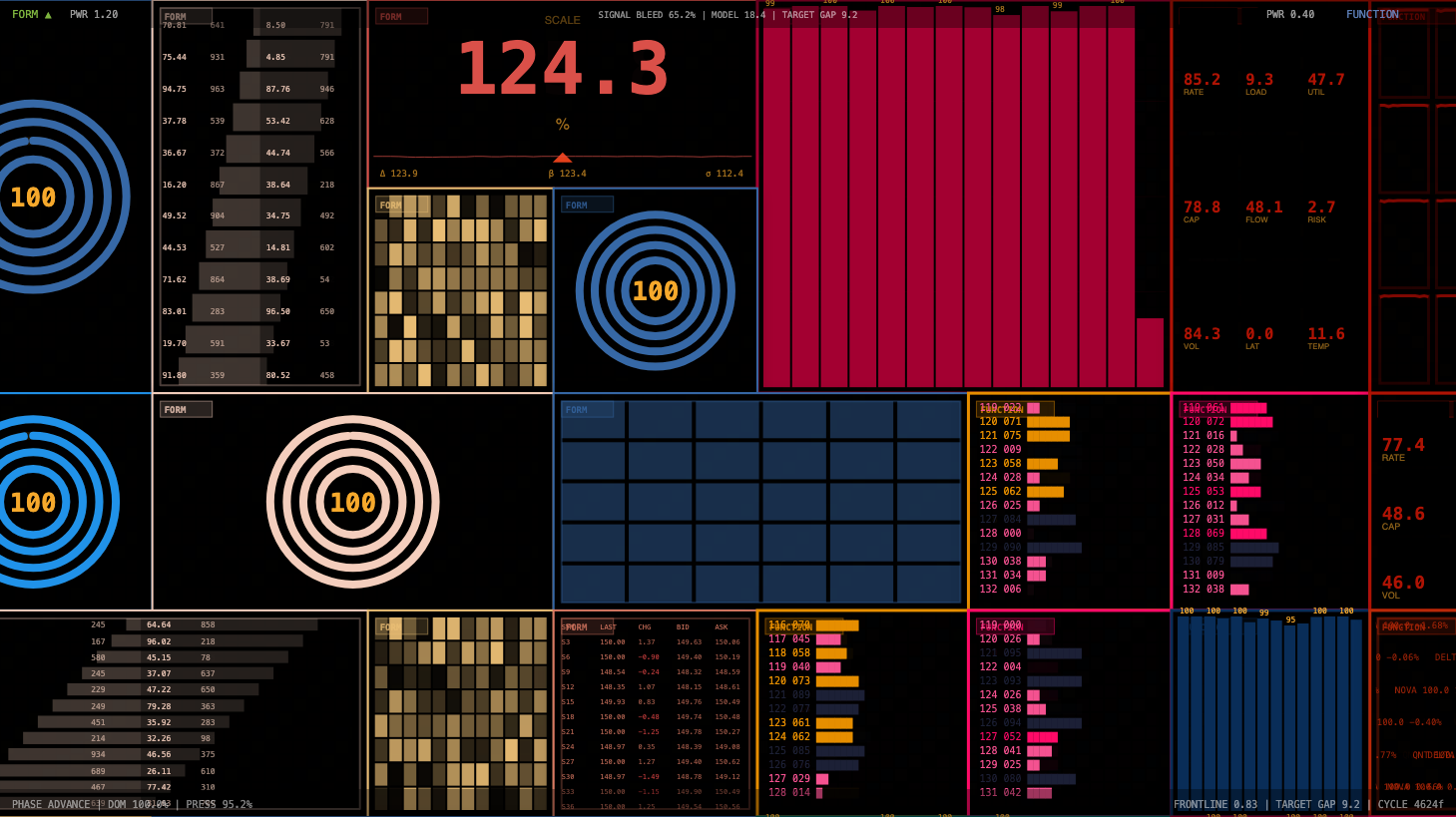
Jonas Lund, Optimized Trajectory, 2026
It has also made the familiar binary increasingly useless. We are told that we must become AI evangelists or anti-technology reactionaries; enthusiastic adopters or obsolete holdouts. I do not recognize myself in either camp.
So I will admit it: I am a Luddite.
I do not mean it in the modern, caricatured sense of someone who fears or refuses to learn new technology. The original Luddites were skilled textile workers objecting to the use of machinery to undermine workmanship, wages, autonomy, and working conditions. Their dispute was not simply with machines. It was with the economic and managerial systems that determined how the machines would be used.
That is also the question facing us now.
Not: Can this task be automated?
But:
What kind of work, learning, and human relationship will this particular form of automation create?
The Rut Test
Before introducing an AI system into work or learning, I believe we should ask five questions.
1. What problem are we actually solving?
“Producing the report takes too long” is not yet a diagnosis. Is the problem unnecessary reporting, unclear decision rights, weak research practices, insufficient staffing, or poor access to information?
2. What existing rut will the technology amplify?
A workplace that rewards performative busyness may use AI to create more performative busyness. A school that confuses task completion with learning may use AI to accelerate task completion while further weakening learning.
3. What human capacity might weaken through disuse?
Judgment develops through practice. So do writing, memory, interpretation, ethical reasoning, collaboration, and the ability to tolerate uncertainty. Efficiency gained by eliminating all cognitive effort may also eliminate the conditions through which expertise develops.
4. Who will carry the hidden burden?
Someone still has to identify hallucinations, check sources, correct bias, protect privacy, resolve exceptions, and take responsibility when the system fails. Automation often redistributes labour rather than eliminating it.
5. What evidence would demonstrate genuine improvement?
More outputs, faster completion, and lower immediate labour costs are not sufficient. Did people make better decisions? Did learners retain and transfer knowledge? Did the quality of the work improve? Did the technology expand human agency—or narrow it?
These are not arguments against using AI. They are arguments against using it without understanding the system it enters.
That is the territory I want to investigate as this newsletter returns: not whether technology is inherently good or bad, but what it makes easier, what it makes harder, what it hides, and who gets to decide.
Before your organization automates its next process, consider one question:
What are you hoping the technology will cure—and what existing rut might it simply reproduce at greater speed?